


OBAMA PUSHES FOR ACTION DURING STATE OF THE UNION
Updated:
February 13, 2013, 7:51 PM
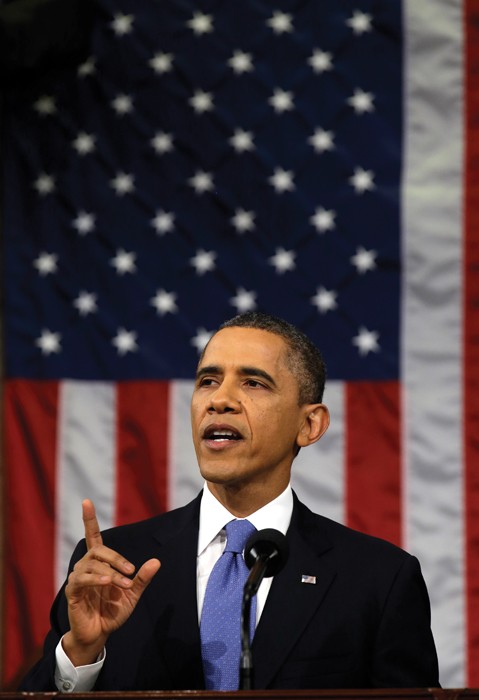
The agenda that President Barack Obama laid out for his second term at Tuesday’s State of the Union Address focused largely on the U.S. economy, including a proposal to increase minimum wage and accommodate modest reforms in programs like Medicare. Obama also explored topics such as increased gun control and the U.S. response to climate change.
Throughout the hour-long speech, the president touched on growing the middle class through spending cuts, job creation and tax and education reform.
Many of his proposals mirror the “traditional liberal vision,” said Erika King, Grand Valley State University professor of political science.
“Obama has been very consistent in his ideas,” King said, mentioning his original economic stimulus plan and its original acceptance by Republicans, who have since lost interest in it. “In the liberal point of view, the federal government is a major player, whereas Republicans have the idea that the government has a secondary role.”
King said the purpose of the State of the Union Address is for the president to put forth his agenda for his upcoming term.
“The problem he faces is convincing the opposition that his ideas are best,” she said. “The saying goes, ‘President proposes, Congress disposes.’ The president needs the (mostly Democratic) house and (mostly Republican) senate to agree on his proposals.”
Obama pushed for a budget reduction based on a mixture of tax increases and spending cuts, saying the “sequester” law that Congress passed in 2011—in which “about a trillion dollars’ worth of budget cuts would automatically go into effect this year” should the parties be unable to agree on a plan to reach the deficit goal—was “a really bad idea.”
Paul Isely, professor and chair of the department of economics in the Seidman College of Business, said the idea of using a mix of taxes and spending changes, as opposed to real entitlement change, is more of a short-term solution.
“The longer-term debt issue (as opposed to the short-term debt problem) is all about entitlements,” Isely said. “Not addressing entitlements means the president is ‘kicking the can down the road’ to whoever will be president next, as by 2020 this will need to be addressed and the longer we wait the more painful the fix is going to be.”
Obama also proposed moderate reforms to Medicare, suggesting that government funding be based on quality of care instead of how many tests are run.
The president said the Affordable Care Act is “helping to slow the growth of health care costs,” and that his reforms to Medicare will help that go further, but did not touch on the topic deeply.
“It seems that there was not a significant focus in the president’s address about health care reform,” said Cynthia McCurren, dean and professor of the GVSU Kirkhof College of Nursing.
McCurren said more attention was given to Medicare/Medicaid.
“Evolving Medicare guidelines promote quality and reimbursement strategies that are tied to performance outcomes; (this serves as a demonstration that can be replicated in the private market),” McCurren said. “The efforts to slow the growth of health care costs must be continued and the president stated his commitment to work in cooperation and in a bipartisan manner, hoping to achieve common ground and collective agreement on strategies moving forward.”
Obama also said job creation is just as important as spending cuts and tax reform when it comes to lowering the national deficit.
“Our first priority is making America a magnet for new jobs and manufacturing,” he said.
He addressed education reform as well, proposing that high-quality schools be available to every child starting from preschool. Obama added the government should be making sure that colleges keep their costs as low as possible for optimum enrollment.
He also proposed raising the current federal minimum wage from $7.25 per hour to $9 per hour.
Isely said this can be a double-edged sword.
“It may or may not get more money into the hands of the less wealthy. In general, there is a trade-off between increased wages and a decrease in jobs that can also result,” Isely said. “The question is which effect is bigger…it will probably not do much to improve the economy overall.”
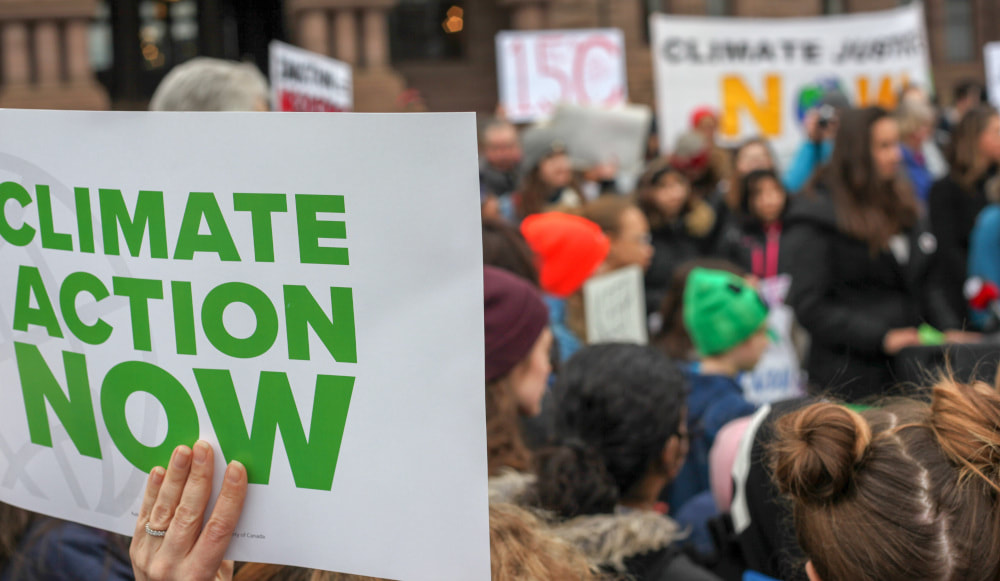
The president also proposed more investment in sustainable energy, urging Congress to adopt a “bipartisan, market-based solution to climate change.”
Isely said another important item is the infrastructure spending proposed by the president.
Obama proposed a “Fix It First” program, in which deteriorating bridges and roads would be fixed as soon as possible.
“(This proposal) has merit if there is a way to pay for it,” Isely said. “Infrastructure spending helps businesses and individuals (and) it also creates a short-term bump in the economy.”

bspaulding@lanthorn.com
Published February 13, 2013
News
The agenda that President Barack Obama laid out for his second term at Tuesday’s State of the Union Address focused largely on the U.S. economy, including a proposal to increase minimum wage and accommodate modest reforms in programs like Medicare. Obama also explored topics such as increased gun control and the U.S. response to climate change.
Throughout the hour-long speech, the president touched on growing the middle class through spending cuts, job creation and tax and education reform.
Many of his proposals mirror the “traditional liberal vision,” said Erika King, Grand Valley State University professor of political science.
“Obama has been very consistent in his ideas,” King said, mentioning his original economic stimulus plan and its original acceptance by Republicans, who have since lost interest in it. “In the liberal point of view, the federal government is a major player, whereas Republicans have the idea that the government has a secondary role.”
King said the purpose of the State of the Union Address is for the president to put forth his agenda for his upcoming term.
“The problem he faces is convincing the opposition that his ideas are best,” she said. “The saying goes, ‘President proposes, Congress disposes.’ The president needs the (mostly Democratic) house and (mostly Republican) senate to agree on his proposals.”
Obama pushed for a budget reduction based on a mixture of tax increases and spending cuts, saying the “sequester” law that Congress passed in 2011—in which “about a trillion dollars’ worth of budget cuts would automatically go into effect this year” should the parties be unable to agree on a plan to reach the deficit goal—was “a really bad idea.”
Paul Isely, professor and chair of the department of economics in the Seidman College of Business, said the idea of using a mix of taxes and spending changes, as opposed to real entitlement change, is more of a short-term solution.
“The longer-term debt issue (as opposed to the short-term debt problem) is all about entitlements,” Isely said. “Not addressing entitlements means the president is ‘kicking the can down the road’ to whoever will be president next, as by 2020 this will need to be addressed and the longer we wait the more painful the fix is going to be.”
Obama also proposed moderate reforms to Medicare, suggesting that government funding be based on quality of care instead of how many tests are run.
The president said the Affordable Care Act is “helping to slow the growth of health care costs,” and that his reforms to Medicare will help that go further, but did not touch on the topic deeply.
“It seems that there was not a significant focus in the president’s address about health care reform,” said Cynthia McCurren, dean and professor of the GVSU Kirkhof College of Nursing.
McCurren said more attention was given to Medicare/Medicaid.
“Evolving Medicare guidelines promote quality and reimbursement strategies that are tied to performance outcomes; (this serves as a demonstration that can be replicated in the private market),” McCurren said. “The efforts to slow the growth of health care costs must be continued and the president stated his commitment to work in cooperation and in a bipartisan manner, hoping to achieve common ground and collective agreement on strategies moving forward.”
Obama also said job creation is just as important as spending cuts and tax reform when it comes to lowering the national deficit.
“Our first priority is making America a magnet for new jobs and manufacturing,” he said.
He addressed education reform as well, proposing that high-quality schools be available to every child starting from preschool. Obama added the government should be making sure that colleges keep their costs as low as possible for optimum enrollment.
He also proposed raising the current federal minimum wage from $7.25 per hour to $9 per hour.
Isely said this can be a double-edged sword.
“It may or may not get more money into the hands of the less wealthy. In general, there is a trade-off between increased wages and a decrease in jobs that can also result,” Isely said. “The question is which effect is bigger…it will probably not do much to improve the economy overall.”
The president also proposed more investment in sustainable energy, urging Congress to adopt a “bipartisan, market-based solution to climate change.”
Isely said another important item is the infrastructure spending proposed by the president.
Obama proposed a “Fix It First” program, in which deteriorating bridges and roads would be fixed as soon as possible.
“(This proposal) has merit if there is a way to pay for it,” Isely said. “Infrastructure spending helps businesses and individuals (and) it also creates a short-term bump in the economy.”

bspaulding@lanthorn.com
- GVSU men’s basketball adds two transfers 2 comments
- Bball fan on GVSU men’s basketball adds two transfers
- Grammar Nazi on GVSU men’s basketball adds two transfers
- Lsvsu12S on Grand Valley Lanthorn: Former GVSU quarterback found dead
- Han Chitti on New organization offers scholarship opportunities
- graduate school personal on GV Writing Center hosts prospective students from young ages
- Fads aren't always so rad
May 20
Posted in: Equilibrium - This is the time of our lives
May 17
Posted in: Equilibrium - Beat exhaustion with balance of perspective
May 14
Posted in: Equilibrium - Make up or break up
May 10
Posted in: Equilibrium - And runnin', runnin'
May 6
Posted in: Equilibrium
Pictures of the Year 2012-2013


Courtesy Photo/Joe Kargula and Erik Peterson run the Marathon leg of the Ironman Triathlon

GVL / Robert Mathews Quarterback Heath Parling (12) leading the offense past Notre Dame College.

GVL / Eric Coulter Senior Jake Isaacson placed eigth in the Spartan Invitational. Isaacson's time of 25:04 was the highest among Division II athletes.

GVL/Jessica Hollenbeck Student Senate President Jack Iott speaks to the assembly during Thursday's meeting.

Courtesy / gvsu.edu President Haas and Montcalm Community College President Robert C. Ferrentino sign the transfer agreement


Courtesy Photo/ GVSU Athletic Department Sophomore Chris Cunningham lines up a putt at a past match.

Courtesy Photo / GVSULakers.com Andrew Darrell prepares to return the serve earlier this season.

GVL / Jessica Hollenbeck President Haas cooks pancakes during Family Weekend's "Pancakes with Presidents".

GVL / Jessica Hollenbeck President Haas cooks pancakes during Family Weekend's "Pancakes with Presidents".

GVL / Archive Forward Briauna Taylor (31) chases down a lose ball in a game last season

Courtesy Photo / Dean Breest Sophomore Allyson Winchester was named the GLIAC Women's Cross Country Athlete of the Year after finishing first with a time of 20:48.8.

GVL / Archive GVSU's Breland Hogan rises and fires over three defenders last season.

GVL/Bo Anderson Briauna Taylor leads the fast break during a game earlier this season.

GVL / Robert Mathews Associate Vice President for Facilities Planning, James Moyer, leading a walk through of the Mary Ideam Pew Library

Courtesy Photo / GVSU DII Men's Hockey Jeremy Christopher chases down a puck during a matchup last season.

GVL / Bo Anderson Students and faculty danced under the spectacular light show in the Devos Place Ballroom

GVL / Robert Mathews Martin L�wenberg, holocaust survivor, speaking at the Genocide Awareness Night presentation in the Grand River Room.

Courtesy / Dean Breest Senior Sam Lockhart finishes her indoor career with two individual national championships in weight throw and shot put at the 2013 National Championships.

Archive / Robert Mathews Giancarlo Brugnoni (40) rounding the bases during a previous game.

GVL/Bo Anderson Seniors Christ Koppenaal, Bill Madsen, and Mitch Weber measure the exterior of the Wesley House as part of an energy audit.

GVL / Robert Mathews Senior Anthony Campanella pitching against Tiffin University during the Lakers double header.

GVL / Eric Coulter Brother Jed Smock, a member of Campus Ministry USA, speaks with fervor to a student. Many students, all with differing views, came to watch the Campus Ministry members speak.

GVL / Sean Mouton A passing walker stops to admire some recently constructed pieces of Art Prize 2012.

GVL Archive Senior Nick Gunthorpe follows through and watches his shot at the Ardenson last year. This weekend the team will be playing in South Haven.

GVL / Bo Anderson GVSU's Katie Martin points to her teammate after safely reaching second base.

GVL / Robert Mathews Mary Idema Pew Library Learning and Information Commons under construction.

GVL / Archive The Grand Valley Rowing Team during Spring Training in Florida last spring.

GVL / Robert Mathews Judge Glenda Hatchett, keynote guest for Monday's King celebration, speaks in the Grand River Room in Kirkhof.

GVL / Robert Mathews Judge Glenda Hatchett, keynote guest for Monday's King celebration, speaks in the Grand River Room in Kirkhof.
Upcoming Events
7:30 am | GVSU Downtown Toastmasters
No events for Fri
No events for Sat
No events for Sun
No events for Mon
Classifieds
In Housing / Roommates
- We have a cute condo in need of 2-3 renters for the next school year. Barkwood condominiums ...
In Housing / Roommates
- Subleaser need in Campus View this Summer. Can move in any day. Rent is 335 a month. Contact ...
In Housing / Roommates
- Subleaser need in Campus View this Summer. Can move in any day. Rent is 335 a month. Contact ...